Desk Setup · 3 min read
Is a standing desk worth it in a small apartment?
A practical decision guide for renters — wobble, cable travel, noise, and when a converter beats a full standing frame.
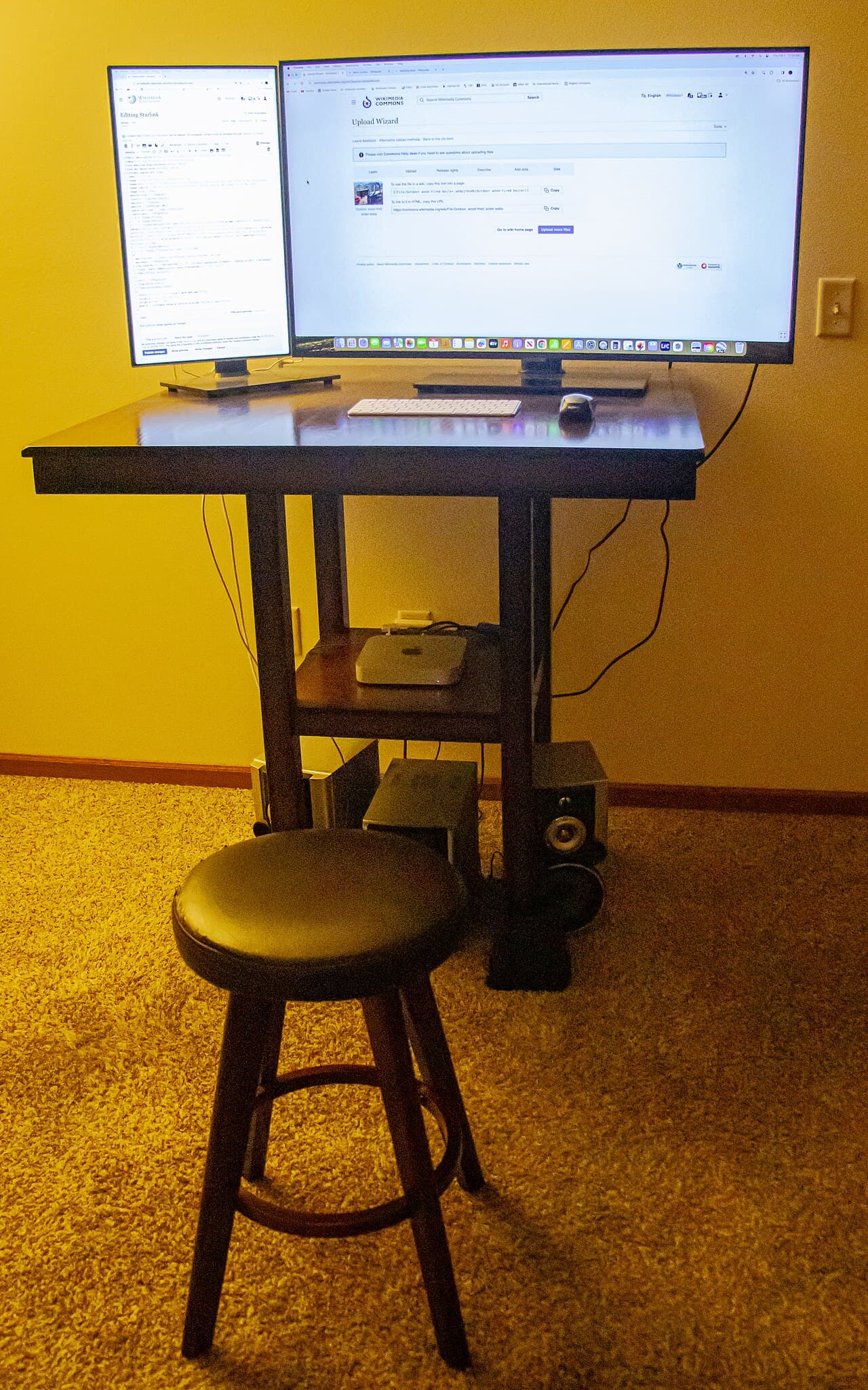
This guide is a decision framework. Shortlist stays small so you can skip anything that fails desk depth, noise, or budget. How we research.
Links may earn a commission. The worth-it decision comes before any model.
Worth it means habits, not Instagram
A standing desk only pays off if you change posture several times a day. Buying a frame and standing twenty minutes once a week is an expensive coat rack.
In small apartments, the cost is also spatial: frames need clearance behind the chair, cable loops need length, and motors add noise neighbors can hear through thin floors.
Try cheaper posture changes first
Before a standing purchase, fix chair height, monitor eye level, and a walking break timer. Many "I need to stand" complaints are really "my laptop is too low" or "I never leave the chair."
A converter on the existing desk is the right experiment if habits are unproven. Full frames make sense when the fixed desk is already a bad height or depth for seated work too.
Apartment constraints that kill standing desks
Uneven floors amplify wobble at standing height. Soft carpet with thick pad can make cheap frames feel unstable with a single monitor.
Cable travel is mandatory. Measure how far the desktop rises and buy display/power cables with slack. Tidy short cables fail the first standing meeting.
Noise: budget motors can hum. If you share walls and take early calls, test lift noise inside the return window at the hours you actually work.
Converter vs full desk in rentals
Converters win when you cannot dispose of the old desk, when you may move soon, or when you only need a keyboard/monitor stack to rise.
Full desks win when the current top is too small, damaged, or the wrong height even while sitting. Do not put a premium frame under a problem that is really "this room has no wall for a 55-inch desk."
Weight capacity matters with dual monitors and arms. Stacking a heavy arm on a light converter is a common week-two regret.
Who should skip standing furniture for now
Skip if you cannot commit to changing posture daily, if walkway clearance fails, or if your work is mostly sofa laptop time anyway.
Skip full electric desks if a $20 anti-fatigue mat and calendar standing breaks have never been tried — habits beat motors.
Examples that match the criteria
Optional examples that illustrate the criteria above — not a mandatory shopping list. Skip any pick that fails desk depth, budget, noise, or return logistics.
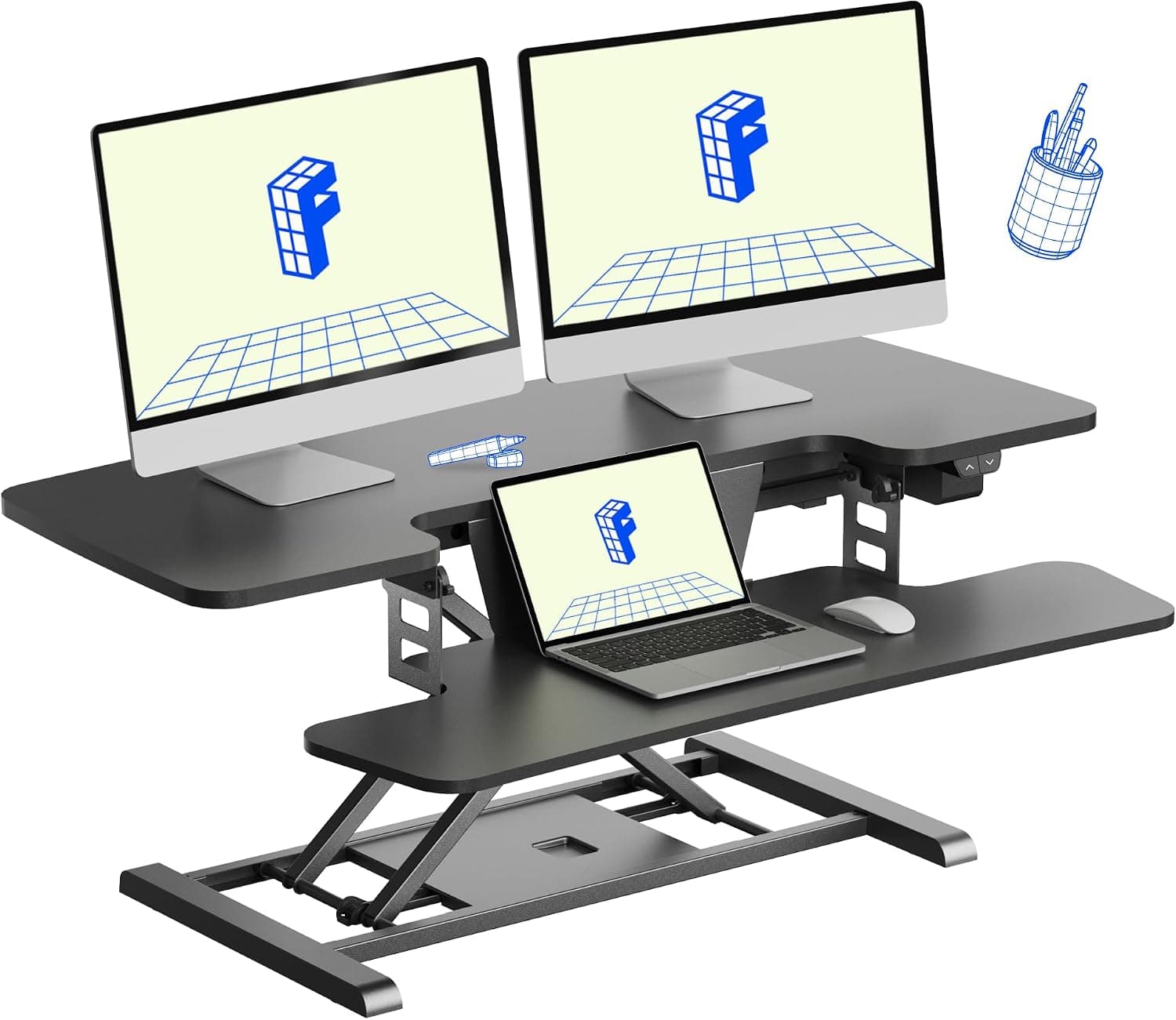 If you want to test standing first
A converter keeps your existing desk and apartment footprint while you test whether sit-stand habits stick — often smarter than a full frame in rentals.
Best for: Renters unsure about standing habits or unable to replace the whole desk.
- +Keeps current desk and room layout
- +Easier to reverse than a full frame purchase
- +Electric lift reduces daily friction vs manual converters
- −Adds height and mass on the existing top
- −Still needs cable service loops
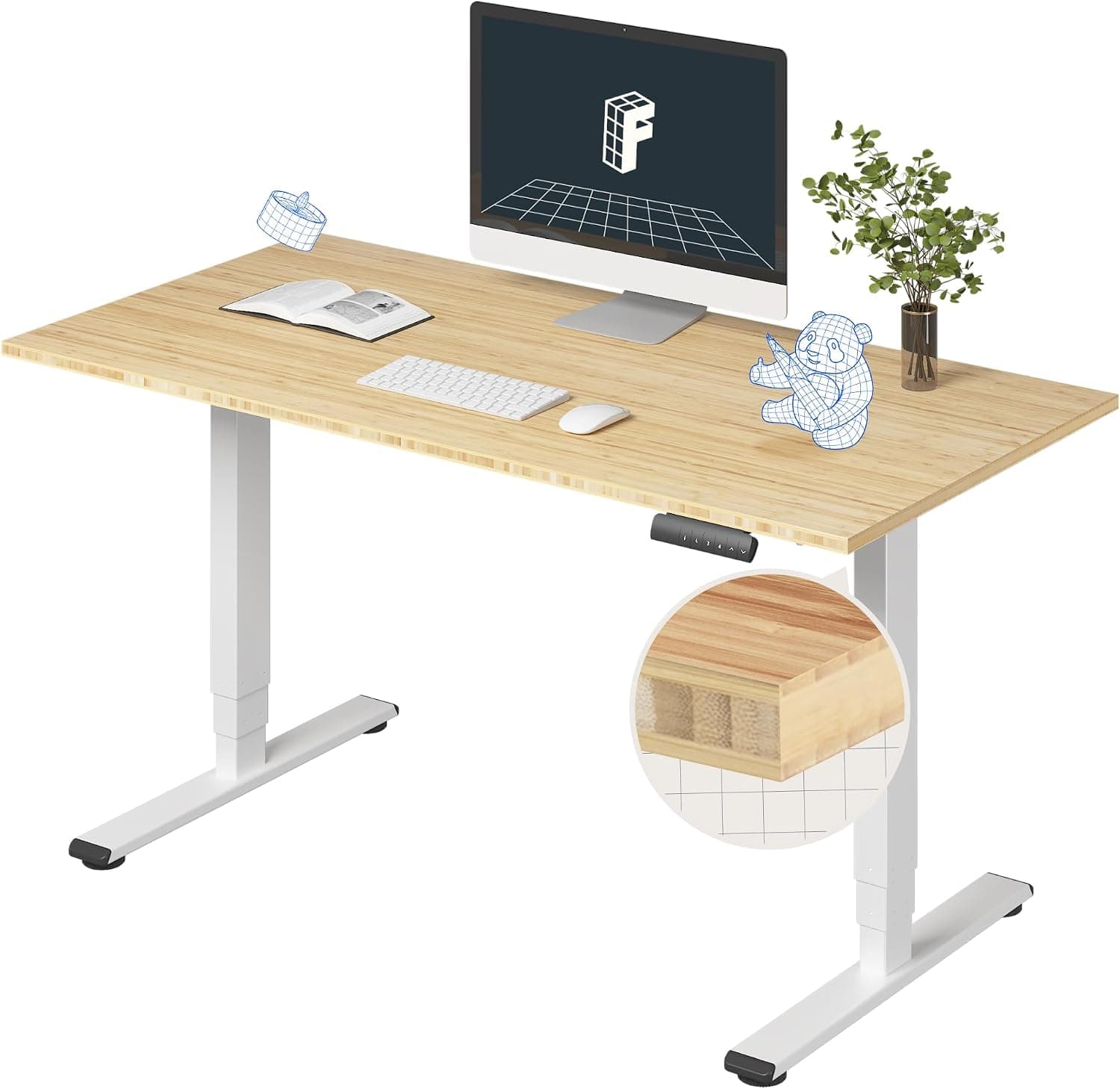 If the whole desk must go
A full standing desk when the current furniture is already wrong and you know you will stand daily — only after measuring width and walkway clearance.
Best for: People replacing a bad fixed desk in a dedicated corner.
- +Clean sit-stand without stacking a converter
- +Stable enough for many single-monitor setups
- +Makes sense when the old desk fails depth or height
- −Larger purchase and delivery impact in apartments
- −Wobble risk rises with dual arms and cheap floors
The verdict
A standing setup is worth it when you will change posture daily and the room can handle cables and clearance. In apartments, test with a converter before replacing the whole desk — unless the existing desk is already wrong while sitting.
FAQ
Will a standing desk fix lower back pain?+
It can help some people by varying posture, but it is not a medical treatment. Chair fit, monitor height, and breaks still matter. Pain that persists needs professional advice.
Manual or electric converter?+
Electric reduces friction so you actually switch. Manual is cheaper but often becomes a sit-only shelf if the lift feels like a chore.
How much room behind the chair?+
Plan enough space to pull the chair out and walk past — often 24 inches / 61 cm minimum. Standing desks that block a closet fail apartment life even if the wall fit looks perfect.
Related guides
Keep reading


Published 2026-11-17