Best Under-Desk Storage for Small Home Office (2026)
Under-desk drawers, shelves, and organizers for small home offices — add storage without eating legroom or drilling rental walls.
Start with the criteria and table. Only open product pages after you know depth, noise, and budget limits. How we research.
Some links in this guide may earn a commission. Prices are approximate and may change.
Bottom line for under-desk storage
Small home offices run out of surface space before floor space. Under-desk storage uses the volume beneath the desktop that most people leave empty — drawers for small items, shelves for drives and books, baskets for grab-and-go gear.
Start with the REFLYING sliding drawer if clutter is mostly pens, cables, and adapters. Add the VIVO shelf if you store hardware or notebooks under the desk. Use the mesh organizer for files and bags you need visible and fast.
Measure knee clearance and drawer depth before buying. The best under-desk product is the one that does not collide with your legs when you scoot in.
Why under-desk storage beats surface trays
Desktop organizers solve visibility but steal the space where your keyboard, mouse, and coffee already compete. Moving storage under the desk keeps the camera-friendly zone clean while items stay within reach.
Floor bins and rolling carts work in large offices but feel cramped in apartments. Under-desk mounts use vertical space you already own without adding another piece of furniture to trip over.
Cable management pairs well with under-desk storage — mount the power strip and drawer on the same frame side so chargers live near the devices they feed.
Installation and renter tips
Clamp mounts are the default for renters — no holes, reversible, move when you change desks. Check desk thickness limits; most clamps support 0.5 to 1.5 inches.
Screw mounts are more stable for heavy shelves but need permission in rental units. Use painter's tape to mark pilot holes and keep screws short enough not to penetrate laminate.
Standing desks may need storage mounted to the fixed frame, not the moving top — otherwise drawers slide relative to your legs when the desk rises.
What mattered when comparing storage options
We focused on products that fit typical 40-to-48-inch wide home desks without blocking central leg room. Each pick installs with basic tools or none at all.
SimpleHouseware drawer variants are widely cloned — we reference the established model with consistent clamp hardware. VIVO shelves handle weight ratings honestly for small UPS units and drive arrays.
We skipped oversized filing cabinets meant for corporate cubicles — they fail the small-office and apartment brief.
Under-desk storage mistakes in small rooms
Do not mount a deep drawer in the center if you are tall with long legs — side-mount near a desk leg instead.
Do not store heat-generating gear in enclosed drawers without ventilation — routers and drives need airflow.
Avoid overloading clamp mounts beyond stated weight limits — sagging drawers scrape knees.
Do not forget sit-stand desks: storage on the moving slab shifts height with the desktop.
Drawer units vs open baskets
Rolling drawer pedestals fit under many standing desks at sitting height but may block when the desk is fully lowered. Measure minimum desk height minus caster diameter.
Open baskets ventilate chargers and spare cables but look messy on video if your camera angle points down. Lidded bins or fabric cubes hide clutter.
Central drawer units between legs reduce leg splay — narrow units or offset placement preserve ergonomic width.
What belongs underneath
Daily: spare cables, label maker, footrest when sitting. Weekly: paperwork inbox, not archive boxes.
PC towers on the floor beside the desk beat under-desk heat traps with zero airflow — unless the unit is designed as a vented cage.
Renters and damage-free mounts
Clamp-on under-desk drawers avoid screw holes. Adhesive fabric organizers suit metal frames; test pull strength before loading tools.
Avoid drilling IKEA tops to add baskets unless you own the furniture outright.
Skip deep storage under active desks
Rarely opened file boxes under your knees become forgotten dead zones. High shelves or closets beat knee-level archaeology.
Heavy drawers on one side can make manual standing desks feel uneven — distribute weight or bolt the pedestal to the frame if the manual allows.
Apartment mobility constraints
Rolling pedestals snag on studio carpet transitions and scratch hardwood if casters are wrong. Swap casters once rather than fighting drag every time you reposition for a video backdrop.
Standing desks at minimum height may crush a drawer unit you forgot to roll out before lowering. Mark a tape line on the leg for safe minimum clearance over any under-desk box.
Renters should favor clamp drawers and fabric bins that leave no screw holes. When you move yearly, under-desk installs you cannot remove cleanly become trash — budget for damage-free mounts or keep storage beside the desk instead.
Heat dust and cable clearance realities
Enclosed under-desk cubbies starve PC towers and charging bricks of airflow — heat rises into the desktop and can throttle laptops on the surface above. Ventilated open baskets or side-mounted towers beat sealed boxes unless the unit is designed with intake paths.
Dust bunnies accumulate faster under rolling desks in apartment carpet — vacuum monthly or fans pull debris into power supplies. Who should skip under-desk drawers: standing desks with minimal lower clearance, knee wells already occupied by subwoofers, and hot-desk setups rebuilt weekly.
Return-window crush test: lower the standing desk fully with drawers rolled out, then deliberately forget once to see if you would damage fingers or drawer fronts. Size pedestal width to leg splay — central drawers between legs reduce ergonomic width and encourage crossing ankles all day.
What belongs under vs beside the desk
Under-desk space works for daily-grab items: spare USB-C cable, label maker, footrest when you sit, and one lidded bin for receipts you will process Friday. Archive boxes, seasonal gear, and “maybe someday” cables belong in a closet — knee-level dead zones fill once and never get cleaned.
PC towers belong beside the desk on a vented stand unless the under-desk cage has intake and exhaust paths. A tower in a fabric cube under a particleboard top cooks drives and makes the desktop above warm to the touch by afternoon.
Paper workflow splits by frequency: active inbox on the desktop or a shallow side pedestal, reference binders on a shelf at eye level, shred-bound stack in a drawer you open daily. Deep drawers under your knees become guilt archives — you forget what is in them because retrieval requires contortion.
Shared apartments: under-desk storage visible on camera from a downward angle should be lidded. Open baskets of chargers read as clutter on standups even when they are “organized.” Neutral fabric cubes beat clear acrylic when the camera sees the knee well.
Move-out checklist for renter storage
Photograph clamp and adhesive placement before move-out. Landlords dispute desk damage when residue patterns do not match the original surface. Prefer clamp drawers and screw-free baskets if you relocate yearly — drilled IKEA tops rarely travel to the next apartment.
Rolling pedestals need caster swaps for the next floor type. Hard plastic wheels that worked on carpet may scratch hardwood at the new place. Pack drawer contents separately; a tipped pedestal in a U-Haul cracks cheap drawer fronts.
Mark minimum desk height on standing-desk legs if a pedestal lives underneath. A tape line at the safe clearance saves crushed fingers and cracked drawer tops when you forget to roll out before lowering.
Who should skip under-desk drawers: sit-stand desks with minimal lower clearance, knee wells already occupied by subwoofers or towers, and hot-desk setups rebuilt weekly. A rolling cart beside the desk moves with you and survives lease transitions without spackle.
Side-by-side comparison
| Feature | Sliding drawer | Fixed shelf | Hanging basket |
|---|---|---|---|
| Typical price | $25 – $35 | $30 – $45 | $15 – $25 |
| Best for | Small items — pens, adapters | Books, drives, small UPS | Files, bags, quick grab items |
| Legroom impact | Low — mounts to side or center rear | Medium — check depth | Low — hangs at desk edge |
| Renter-friendly | Yes — clamp mount | Mostly — clamp or screw | Yes — hook or clamp |
| Dust protection | Good — enclosed | Open shelf | Open — items visible |
Picks that match the criteria above
These products illustrate the criteria above — they are not a mandatory shopping list. Skip any pick that fails your desk depth, budget, noise limits, or return logistics.
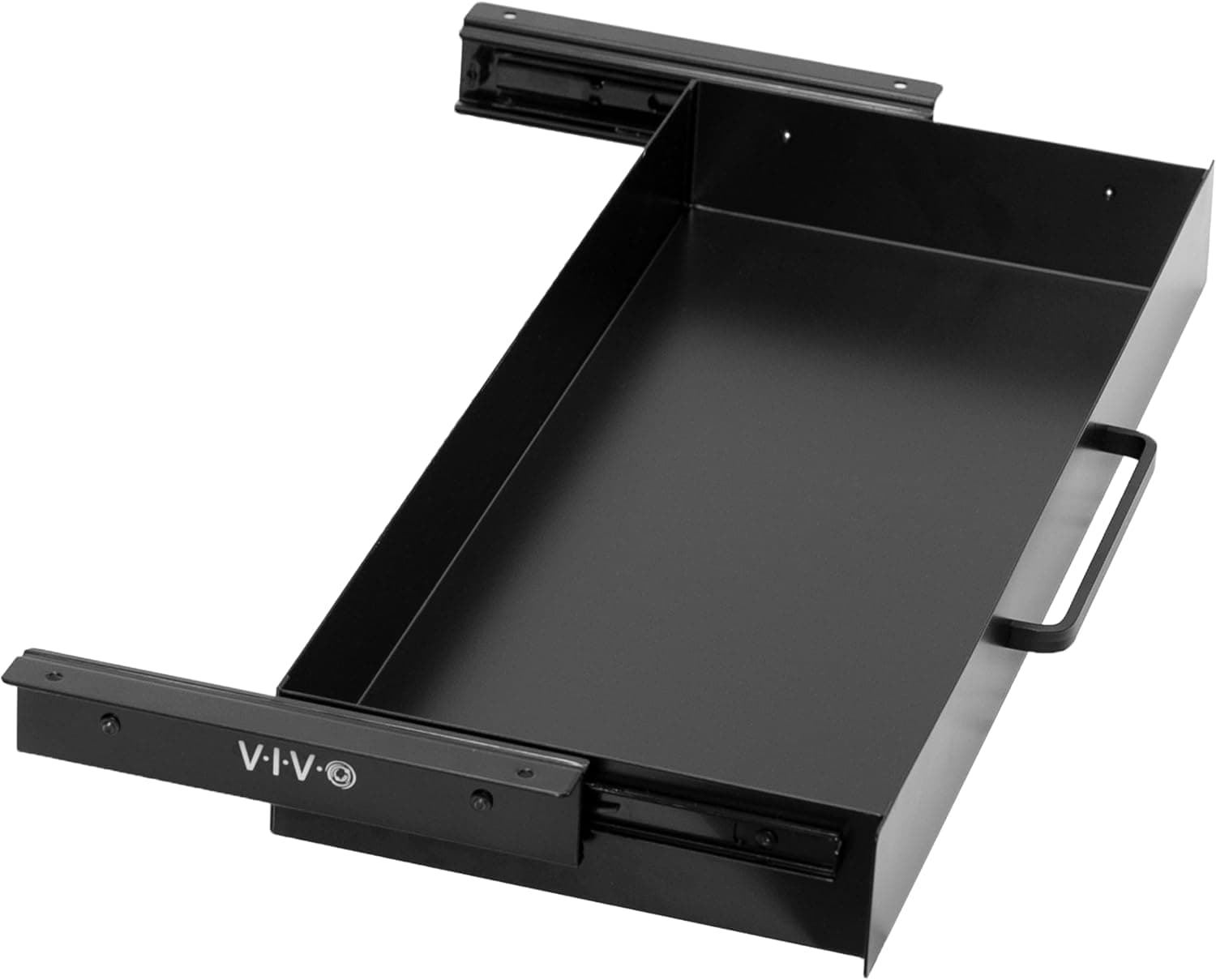
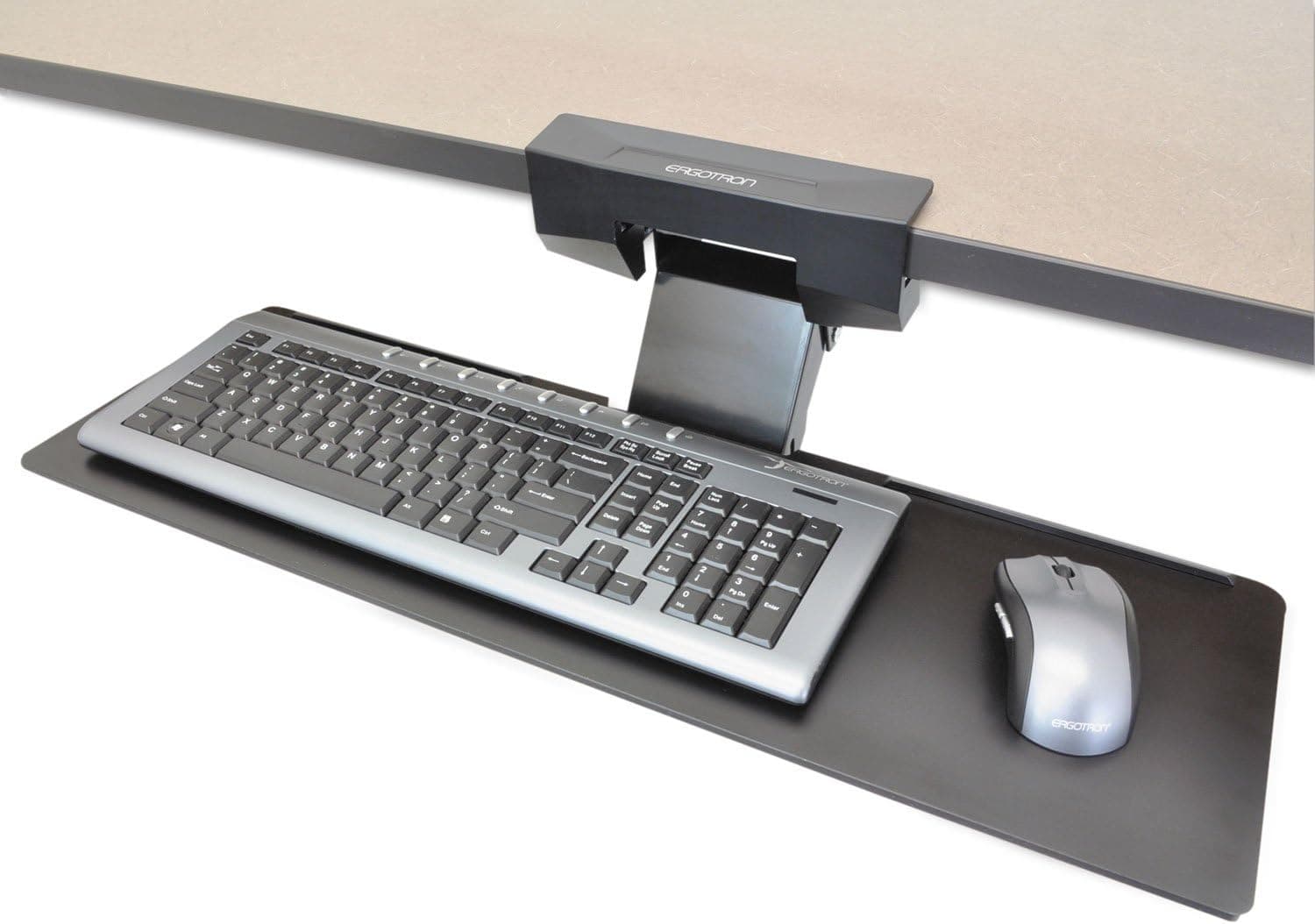
Best overallA clamp-mounted drawer that slides out from under the desktop — the fastest way to stash chargers, sticky notes, and cable adapters without another box on the surface.
Best for: Small desks where every inch of tabletop matters.
- +No drilling — clamp fits most desk thicknesses
- +Keeps small clutter off the visible desktop
- +Slides smoothly for one-hand access
- −Limited depth — not for thick binders or large items
- −Center-mount models may reduce leg clearance for tall users
 Best shelf
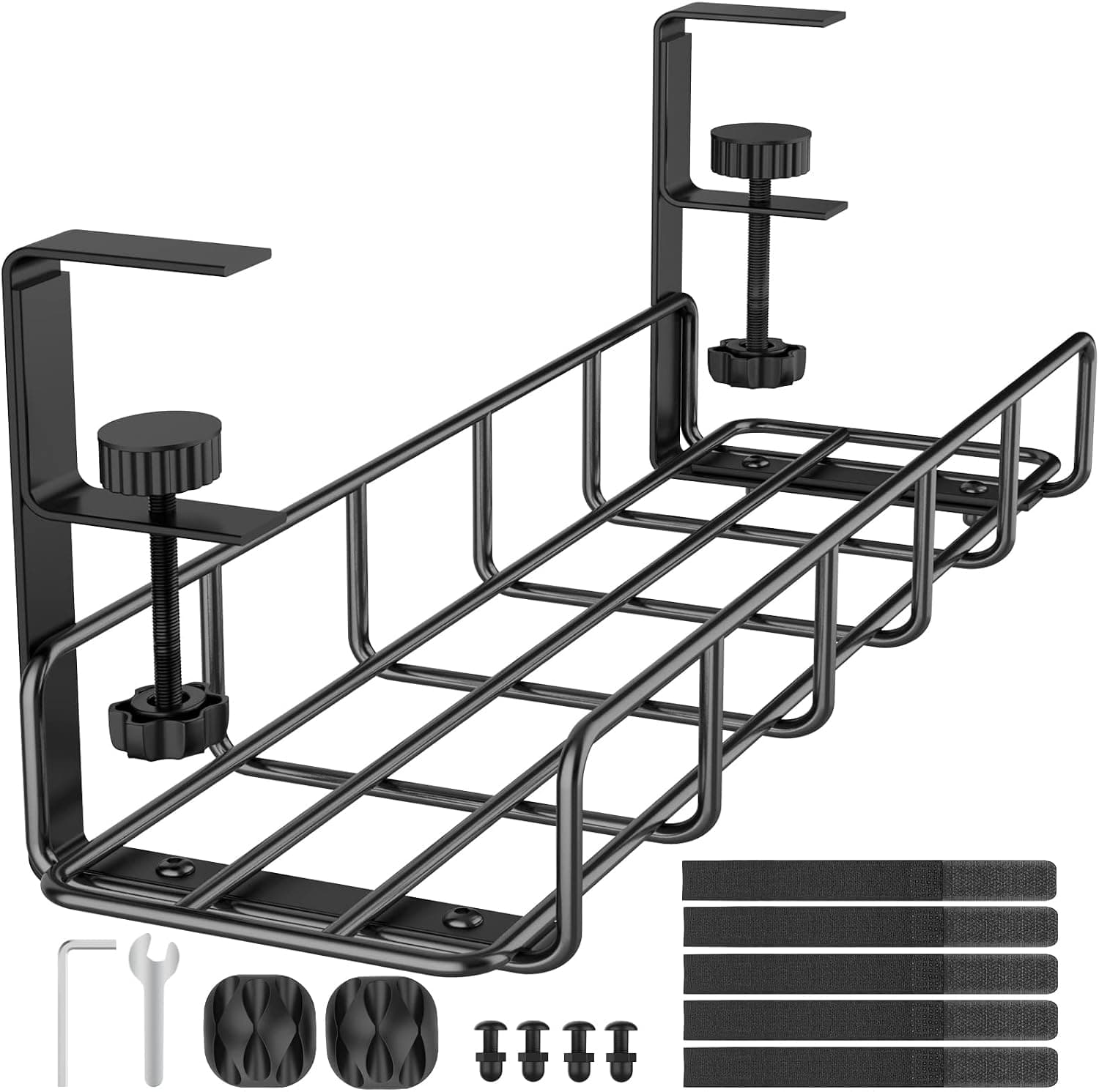
A steel shelf that mounts beneath the desktop to hold external drives, notebooks, or a compact UPS — frees floor space and keeps essentials within arm's reach.
Best for: Workers who keep backup drives, routers, or reference books at the desk.
- +Rated for heavier items than fabric baskets
- +Clamp or screw options on many models
- +Ventilated open design for electronics
- −Open shelf collects dust — not ideal for rarely used items
- −Measure knee clearance before center-mounting
 Best budget
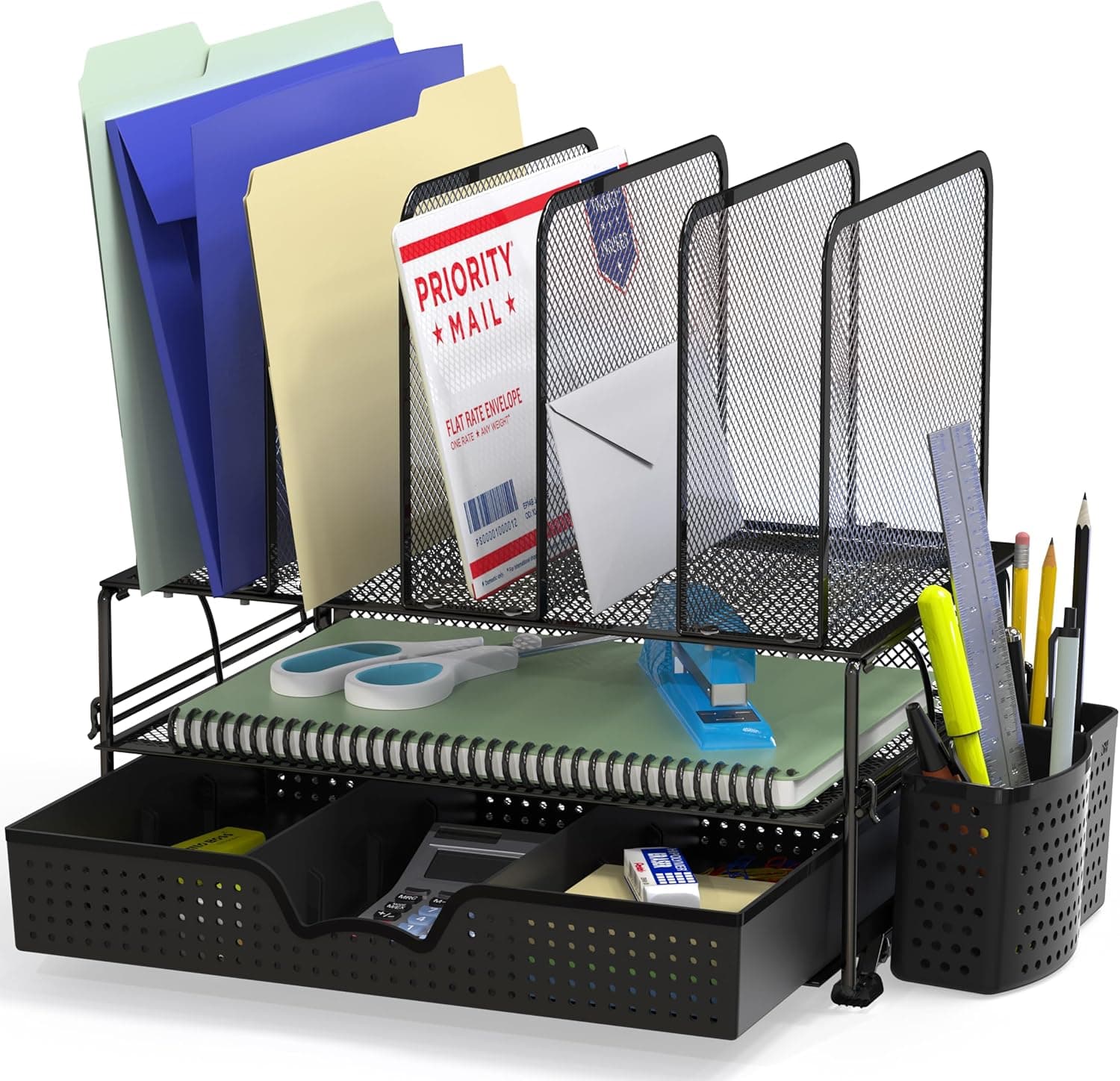
An open basket that hangs or clamps under the desk edge — ideal for flat files, laptop bags, or items you grab when leaving the room.
Best for: Apartment offices where the desk doubles as an entry drop zone.
- +Inexpensive and easy to reposition
- +Fits awkward desk frames where drawers will not clamp
- +Open top — no fumbling with drawer pulls
- −Not enclosed — visually messy if overfilled
- −Lower weight limit than steel shelves
The verdict
Add the REFLYING sliding drawer first to clear small clutter off the top. Mount the VIVO shelf if you store drives, books, or a UPS underneath. The mesh organizer is the quick budget win for files and bags — measure legroom once and you will stop stacking stuff on the floor beside the desk.
Advertisement
Ad placement activates after cookie consent.
FAQ
Will an under-desk drawer hit my knees?+
It depends on mount position and your height. Side-mounted drawers near desk legs usually preserve center legroom. Measure from seated knee height to underside of desk before choosing center-mount products.
Clamp or screw mount — which is better?+
Clamps are renter-friendly and fine for light drawers. Screw mounts are better for heavy shelves with drives or UPS units. Match mount type to weight and how permanent the desk is.
Can I use under-desk storage with a standing desk?+
Yes, but mount to the fixed crossframe when possible. Drawers attached to the moving top will change height relative to your body as you stand and sit.
Drawer vs cable tray — do I need both?+
Often yes — they solve different problems. Cable trays manage power and slack; drawers store small items you use daily. Many setups benefit from both on opposite sides of the desk frame.
Related guides
Keep reading
Published 2026-07-05 · Updated 2026-07-26